
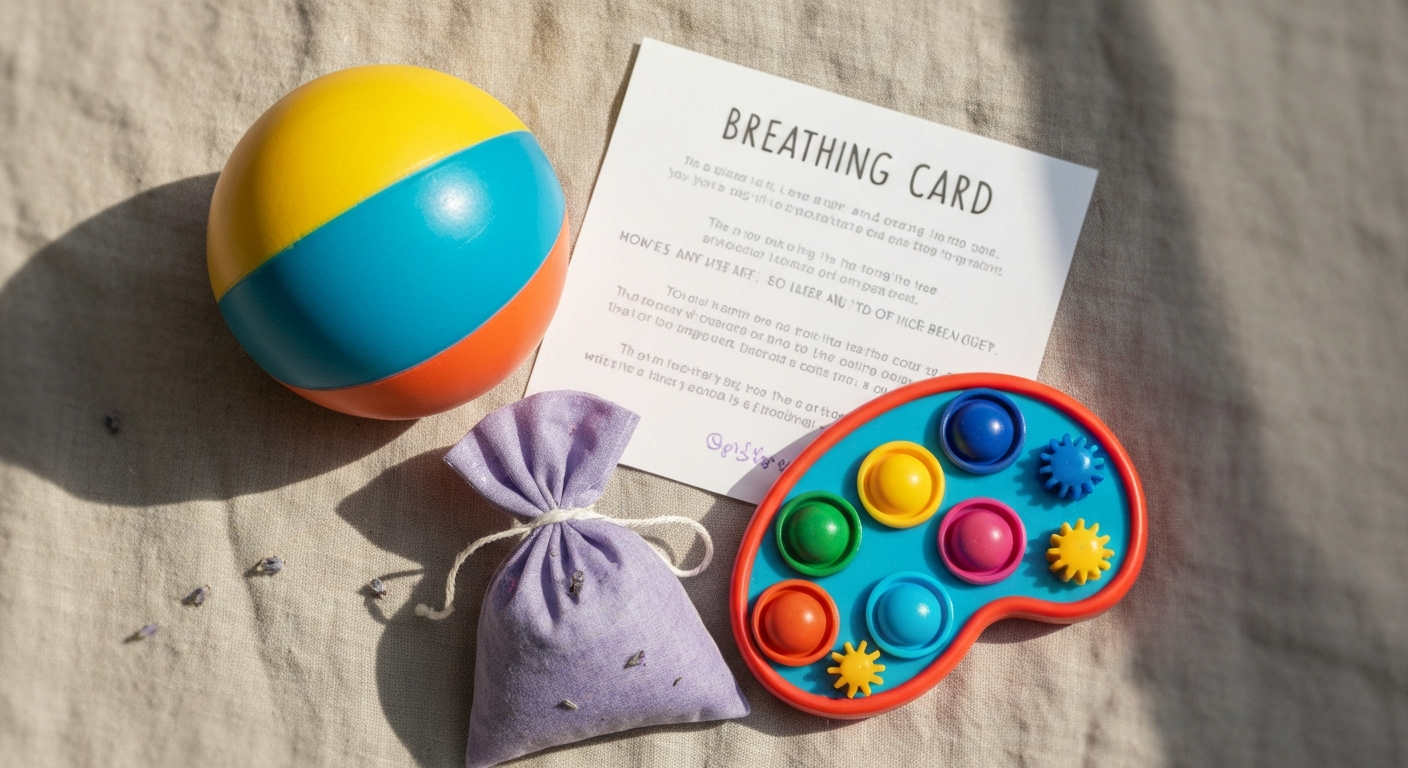
What Is a Calm Down Kit?
A calm down kit is a portable collection of tools, activities, and sensory items that help a child self-regulate when emotions get big. Think of it as a first aid kit for feelings — everything a child might need to move through anger, anxiety, overwhelm, or sadness is gathered in one accessible place.
Unlike a calm down corner (which is a designated space), a calm down kit is portable. It can go in a backpack, sit on a shelf in the car, live in a classroom, or travel to grandma’s house. The portability is a huge advantage — because big feelings don’t only happen at home.
The best calm down kits are personalized. What works for one child may not work for another. This guide covers every category of tool you might include, so you can build a kit that’s genuinely right for your kid.
Choosing Your Container
Before filling your kit, pick a container. This matters more than you might think — the container itself sends a message. Options that work well:
- A small craft or carrying case with a handle (portable and organized)
- A clear shoebox or storage bin (so kids can see what’s inside)
- A small backpack (great for kids who like to “own” their kit)
- A decorated shoebox (let your child decorate it — ownership increases use)
- A canvas tote bag (flexible and inexpensive)
Involve your child in picking or decorating the container. When kids feel ownership over the kit, they’re far more likely to actually reach for it when things get hard.
What to Put in a Calm Down Kit: Complete Item Guide
Category 1: Sensory/Tactile Tools
These items give hands something to do and provide the body with regulating sensory input:
- Stress balls or squeeze toys: Different textures and resistance levels appeal to different kids. Include 2-3 options.
- Fidget spinner or fidget cube: Great for kids who need constant hand movement to concentrate or calm.
- Putty or slime: Therapeutic kneading putty (like Theraputty) is especially good for releasing tension.
- Smooth worry stone: A small polished stone to rub between the fingers. Ancient wisdom, modern neuroscience agrees.
- Textured sensory strip: A strip of fabric with different textures (velvet, bumpy, silky) for tactile stimulation.
- Small weighted item: A small beanbag or weighted stuffed animal for that comforting deep pressure.
Category 2: Visual Calming Tools
Items that engage the visual system in a way that promotes calm:
- Glitter calm-down bottle: Shake it, watch the glitter fall slowly. The slow visual naturally slows breathing. These are easy to DIY or buy ready-made.
- Pinwheel: A small pinwheel gives something to blow at, encouraging slow, controlled exhales.
- Sand timer: Visual representation of time passing. “I’ll feel better before all the sand falls.”
- Feelings cards: Small cards with emotion faces for identifying and naming what’s happening.
Category 3: Breathing Aids
Tools that support and guide breathing exercises:
- Breathing exercise card: A laminated card with star breathing, box breathing, or belly breathing instructions. Kids can follow along independently.
- Pinwheel: Doubles as a breathing tool (see above).
- Bubble wand and small bottle of bubbles: Blowing bubbles requires slow, controlled breaths — built-in breathing practice.
Category 4: Comfort Items
Sometimes big emotions just need comfort, not a technique:
- Small comfort stuffed animal: A beloved small animal that travels with the kit.
- Mini photo album: A few photos of family, pets, or favorite places. Connection and comfort in the palm of their hand.
- Soft small blanket or comfort cloth: The sensory comfort of something familiar and soft.
- A note from you: Write a short, loving note your child can read when they’re upset: “I love you even when things are hard. I’m so proud of you.”
Category 5: Emotional Expression Tools
Items that help children process and externalize emotions:
- Small journal or blank notepad: For writing or drawing feelings out. Even scribbling can be cathartic.
- Crayons or colored pencils: Art is an incredibly effective emotional processing tool for children.
- Feelings chart or emotion wheel: A visual reference for naming the feeling before working on managing it.
- Worry paper and small jar: Write or draw the worry, fold it up, and put it in the jar. Externalizing worries makes them feel more contained.
Category 6: Physical Movement Aids
For kids who need to discharge energy to regulate:
- Small squishy ball for throwing against a wall: Safe physical expression of big feelings.
- Stretching/yoga card: A few simple yoga poses to do when the body needs to move.
- Jump rope card: A reminder prompt to go do 10 jumps or star jumps when things feel too big.
Category 7: Calming Scents
The olfactory system has a powerful and direct connection to the limbic (emotional) brain:
- Small lavender spray or sachet: A spritz of lavender is genuinely soothing for many children.
- Scented play dough: The combination of kneading AND calming scent is doubly effective.
- A familiar comforting scent: A small cloth spritzed with your perfume — for young children especially, your scent is profoundly calming.
Category 8: Auditory Tools
For kids who find sound regulating:
- Small music player or kid-safe MP3 player: Pre-loaded with calming songs or nature sounds.
- Earplugs or kids’ earmuffs: For sensory-sensitive children who need to reduce input, not add it.
Building the Kit With Your Child
The process of building the kit together is almost as valuable as the kit itself. Here’s how to do it:
- Explain what a calm down kit is: “This is your special box of things that can help you when feelings get really big.”
- Let them look at options from each category and choose 1-2 that appeal to them.
- Practice using each tool together during a calm moment: “Let’s try the squeeze ball. How does that feel?”
- Introduce the kit officially and make a big deal of it — it’s a milestone of emotional growth.
- Review and refresh periodically. What worked at 3 may not be interesting at 6.
Teaching Kids to Use the Kit
The kit is only as useful as your child’s ability to reach for it when overwhelmed. During calm times:
- Role-play scenarios: “Pretend you just got really mad. What would you take out first?”
- Cue them gently in the moment: “I can see you’re starting to feel upset. Want to get your calm down kit?”
- Celebrate when they use it independently: “I noticed you grabbed your squeeze ball when you were frustrated. That was so smart.”
A Sample Starter Kit
Not sure where to start? Here’s a simple, well-rounded starter kit for ages 4-8:
- 1 squeeze ball
- 1 glitter calm-down bottle
- 1 laminated breathing card
- 1 small notebook + 4 crayons
- 1 feelings chart
- 1 small comfort stuffy
- 1 love note from you
Keep the total number of items manageable — 5-8 items is plenty. The goal is accessible and usable, not impressive. A well-curated calm down kit set is also available if you’d like a head start.
You’re Building a Life Skill
When your child reaches for their calm down kit instead of melting down, exploding, or shutting down — that’s a genuine developmental victory. They’re building the emotional regulation skills that will serve them in school, in friendships, and into adulthood. Every time you sit with them, help them name what they’re feeling, and walk them through a tool — you’re wiring that skill deeper. That’s not small. That’s everything.
Related Reading
- 15 Calm Down Corner Ideas for Kids
- Weighted Blankets for Kids: Benefits, Safety, and Top Picks
- Breathing Exercises for Kids: 8 Easy Techniques
