
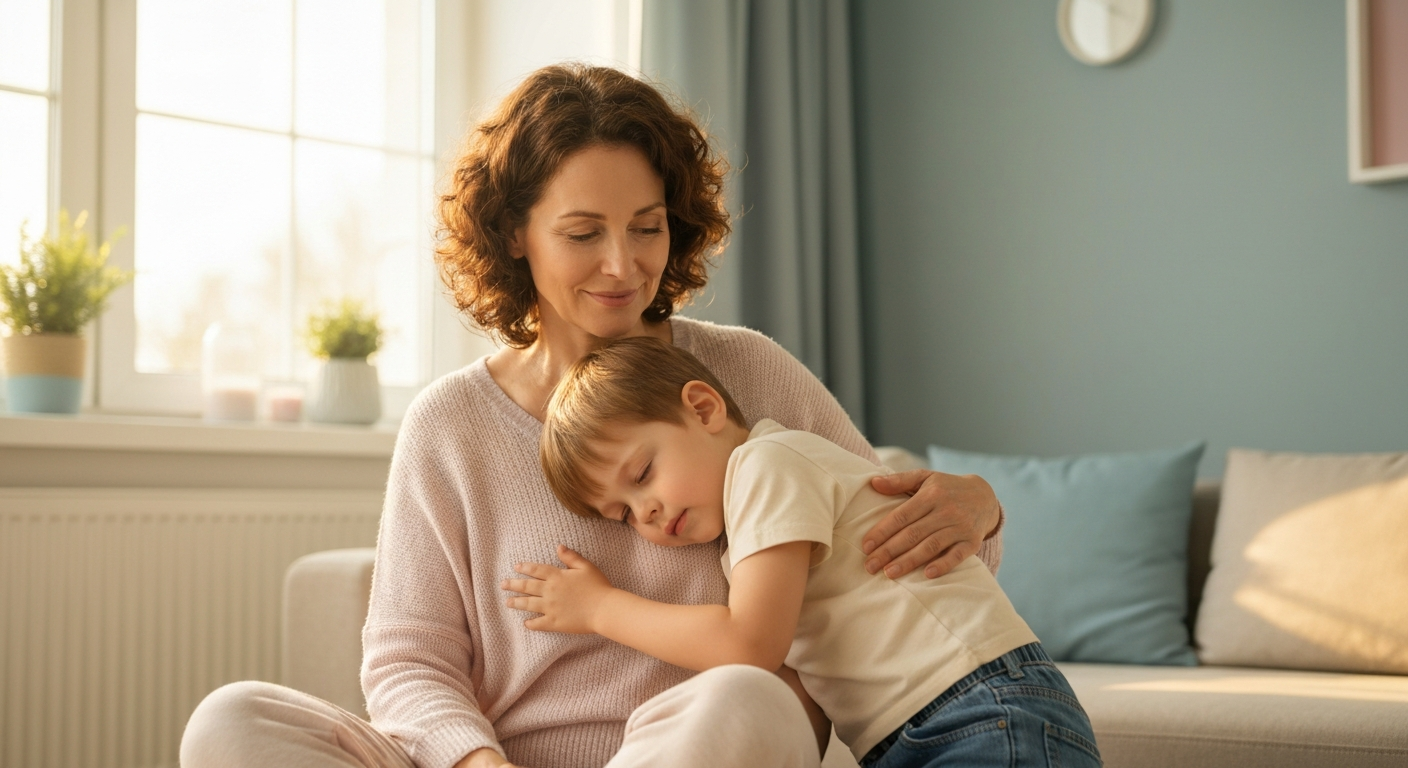
Understanding Anxiety in Kids
Childhood anxiety is more common than most parents realize. According to the CDC, approximately 1 in 11 children in the US has been diagnosed with anxiety — and many more experience anxious feelings without a formal diagnosis. If your child worries excessively, has trouble separating from you, avoids new situations, or melts down before school or social events, you’re not imagining it. And you’re not doing anything wrong.
The good news? There are real, research-backed strategies that can help. These aren’t quick fixes — anxiety in kids (like anxiety in adults) takes time and practice to manage — but with consistent support, most children learn to navigate their worries in healthy ways. Here are 10 calming techniques that genuinely make a difference.
10 Calming Techniques for Kids with Anxiety
1. Name It to Tame It
Neuroscientist Dan Siegel coined this phrase, and it’s become a cornerstone of child therapy for a reason. When we label an emotion, we actually reduce activity in the amygdala — the brain’s alarm system — and engage the prefrontal cortex, which helps us think clearly. In plain terms: just naming “I feel worried” helps the brain calm down.
Practice emotion labeling with your child during everyday moments, not just when anxiety spikes. The more they can name feelings accurately, the better equipped they’ll be during hard moments. Try keeping a feelings chart visible in your home for easy reference.
2. Belly Breathing (Diaphragmatic Breathing)
Deep belly breathing activates the parasympathetic nervous system — the “rest and digest” mode that counteracts the fight-or-flight anxiety response. Teach your child to place one hand on their belly and breathe in slowly so their belly rises, then exhale slowly. Even a few deep breaths can measurably lower heart rate and cortisol.
Make it fun: pretend to blow up a balloon in your belly. Breathe in for 4 counts, hold for 2, out for 6. Practice daily, not just during anxious moments, so it becomes automatic when needed.
3. The 5-4-3-2-1 Grounding Technique
This sensory grounding exercise interrupts anxious thought spirals by anchoring the child firmly in the present moment. Ask them to name:
- 5 things they can see
- 4 things they can touch (and actually touch them)
- 3 things they can hear
- 2 things they can smell
- 1 thing they can taste
It works because it’s nearly impossible to simultaneously spiral in worry AND notice what color your socks are. The present-moment focus gently interrupts the anxiety loop.
4. Create a Worry Time
For kids who worry a lot, giving worry a dedicated time actually reduces it overall. Designate 10-15 minutes each day as “worry time” — a set time when your child can bring all their worries to you. When worries come up at other times, say gently: “Let’s save that for worry time.” This teaches the brain that worries have a container and don’t need to run constantly in the background.
5. Movement as Medicine
Anxiety is energy with nowhere to go. Physical movement gives it a productive outlet. Exercise has been shown to reduce anxiety in children as effectively as some therapies. You don’t need a formal workout — a dance party in the kitchen, a jump on the trampoline, a walk around the block, or even jumping jacks can discharge anxious energy and reset the nervous system.
If your child is anxious before a specific event (a doctor’s appointment, first day of school), plan some movement beforehand whenever possible.
6. Validate First, Problem-Solve Second
One of the most powerful things you can do when your child is anxious is simply validate their feelings before jumping to solutions. Resist the instinct to say “You’ll be fine!” or “There’s nothing to worry about.” While well-intentioned, these phrases communicate that their feelings are wrong.
Instead, try: “That sounds really scary. I understand why you feel that way.” Once your child feels heard, they’re neurologically more open to calming strategies. Validation doesn’t mean agreeing with the worry — it means acknowledging the emotion is real.
7. Thought Challenging for Older Kids
For children 7 and older, a simplified version of cognitive behavioral therapy (CBT) thought work can be very effective. When a worried thought comes up, ask:
- “Is this definitely true?”
- “What’s the most likely thing that will actually happen?”
- “Have you handled something hard before?”
- “What would you tell a friend who was feeling this way?”
This builds the habit of examining anxious thoughts rather than accepting them as facts. Books like Worry Monster books for kids make this concept very accessible.
8. A Consistent, Predictable Routine
Anxiety often thrives in uncertainty. For anxious children, knowing what to expect is profoundly calming. A consistent daily routine — especially around wake-up, meals, and bedtime — provides a scaffold of predictability that reduces baseline anxiety significantly.
Visual schedules (picture charts for younger kids, written lists for older ones) are especially helpful. When kids can see what’s coming next, they don’t have to worry about it.
9. Progressive Muscle Relaxation
This technique involves tensing and releasing muscle groups throughout the body, which creates a noticeable contrast between tension and relaxation. Kids as young as 5 can learn it with playful framing: “Squeeze like you’re making lemon juice, now let it go. Squish your toes like mud, now relax.” It teaches children to recognize and release physical tension they often carry without realizing it.
10. Model Healthy Anxiety Management
Kids learn anxiety (and anxiety management) largely from watching the adults around them. Narrate your own process: “I’m feeling a little nervous about this meeting, so I’m going to take a few deep breaths before I go.” This normalizes anxiety, models that it’s manageable, and gives your child a concrete roadmap.
Also check your own anxious reassurance-seeking patterns. If you repeatedly reassure your child excessively, it can actually reinforce anxiety by confirming there’s something to worry about. Gentle, calm acknowledgment is more effective than endless reassurance.
When to Seek Professional Support
These strategies work best for typical childhood anxiety. If your child’s anxiety is:
- Significantly interfering with school, friendships, or daily activities
- Getting worse despite consistent support
- Accompanied by physical symptoms (stomachaches, headaches, sleep problems)
- Resulting in complete refusal (school refusal, refusing to eat, etc.)
…it’s worth consulting with your pediatrician or a child therapist who specializes in anxiety. Cognitive Behavioral Therapy (CBT) and play-based therapy are both highly effective and evidence-based options.
You Are Your Child’s Greatest Calming Tool
All of these techniques are valuable — but remember that you are the most powerful calming tool your anxious child has. Your regulated, calm, warm presence is the co-regulation that their developing nervous system runs on. You don’t have to be perfect. You just have to keep showing up, keep learning, and keep communicating: I’ve got you. We’ll figure this out together.
Consider keeping a children’s anxiety workbook on hand to work through exercises together. Sometimes having a structured activity to do side-by-side makes the conversation easier for everyone.
Related Reading
- 15 Calm Down Corner Ideas for Kids
- Breathing Exercises for Kids: 8 Easy Techniques
- How to Stop Toddler Tantrums: What Actually Works
