
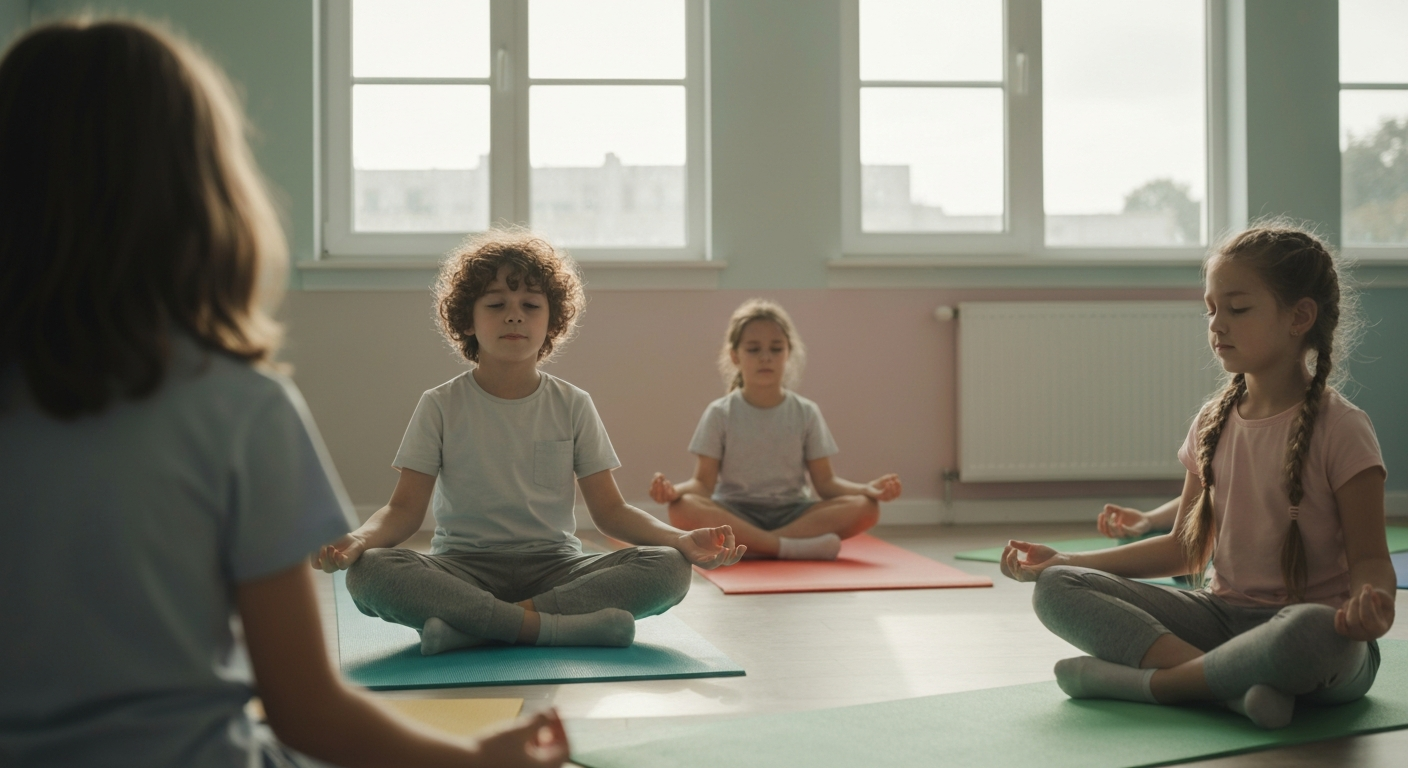
What Is Mindfulness for Kids, Really?
When you hear the word “mindfulness,” you might picture a silent adult sitting cross-legged for 30 minutes — which is about as appealing to most children as a trip to the dentist. The good news: that’s not what kids’ mindfulness looks like, and it doesn’t have to be.
Mindfulness for children simply means paying attention to the present moment — what’s happening right now in their bodies, thoughts, and surroundings — with curiosity rather than judgment. And when you frame it as play, it turns out kids are naturally brilliant at it. They’re already wired to live in the present. We just need to give them activities that channel that tendency intentionally.
Research shows that regular mindfulness practice in children reduces anxiety, improves focus, builds emotional regulation, increases empathy, and even supports academic performance. Here are 20 mindfulness activities for kids that feel like play — because they basically are.
20 Mindfulness Activities for Kids
1. The Glitter Jar (Mind in a Jar)
Fill a clear jar with warm water, glitter glue, and a handful of extra glitter. Shake it up and watch the glitter swirl. Ask your child: “When the glitter is swirling, that’s what our mind feels like when we’re upset or distracted. What happens when we wait and just breathe?” Watch as the glitter slowly settles to the bottom, leaving the water clear. The metaphor is powerful enough that kids often self-reference it: “My mind is glittery right now.”
2. Mindful Eating: Raisin (or Berry) Exercise
This classic mindfulness exercise from Jon Kabat-Zinn’s program works beautifully with kids. Give your child one raisin (or a single berry or piece of chocolate). Ask them to:
- Look at it closely — what do they notice about its shape, color, texture?
- Smell it — what does it smell like?
- Place it in their mouth without chewing — what does it feel like?
- Slowly chew and notice every sensation and flavor
This exercise trains the brain to slow down and pay attention to one thing at a time. Most kids find it fascinating — especially when they realize a tiny raisin is far more interesting than they thought.
3. Body Scan
A child-friendly body scan helps kids get out of their heads and into their bodies — especially useful before sleep or after an overwhelming experience. Lie down together and slowly guide attention from toes to head: “What do your toes feel like right now? Are they warm or cold? Tingly or heavy?” The slow, gentle narration naturally shifts the nervous system toward calm.
4. Mindful Walking (Nature Scavenger Hunt)
Turn a walk outside into a mindfulness practice by giving children specific things to notice: find 3 things that are the exact same color. Notice how the grass feels under your feet. Listen — what sounds do you hear? Stop and count how many different bird sounds there are. Present-moment awareness through the senses, disguised as a nature adventure.
5. Freeze Dance + Feelings Check-In
Play music and dance. When the music stops, everyone freezes AND does a quick feelings check: “How does your body feel right now? Where do you feel it?” This teaches body awareness — a key foundation of emotional intelligence — in the middle of joy and movement. No one needs to know it’s mindfulness.
6. Mindful Coloring
Coloring (especially intricate patterns like mandalas) is a legitimate mindfulness practice. The focused attention on staying in the lines, choosing colors, and the repetitive physical motion quiets mental chatter. Keep a kids’ mindful coloring book on hand for low-demand, regulating quiet time.
7. Cloud Watching
Lie on a blanket outside and watch clouds drift by. Notice their shapes, how they change, how slowly they move. No agenda, no narration needed — just watching. This is pure present-moment awareness in its most effortless form. Many kids find it deeply peaceful, especially those who are usually in constant motion.
8. Mindful Stretching (Kids’ Yoga)
Simple yoga poses taught with animal names (“downward dog,” “cat-cow,” “butterfly”) combine body awareness, breathing, and movement in a way that young children absolutely love. Even 5-10 minutes of simple poses, done slowly and with breath awareness, builds body-mind connection. A kids’ yoga card deck makes it easy to guide sessions without any training.
9. Sound Meditation (Bell Game)
Ring a bell, singing bowl, or even tap a glass, and ask your child to raise their hand when they can no longer hear the sound. Then ask: “What sounds can you hear now? What’s the quietest sound in the room?” This trains sustained attention and brings children into present-moment auditory awareness in about 60 seconds.
10. Weather Report for Feelings
Ask your child to describe how they’re feeling using weather: “If your feelings were weather today, what would it be? A sunny day? A storm? Partly cloudy?” Then ask what “weather” they’d like to feel by the end of the day. This externalization makes abstract emotions concrete and approachable — especially for children who struggle with direct emotion-naming.
11. Gratitude Rock
Find a special smooth stone (at the beach, on a hike, or at a craft store). At bedtime, hold the “gratitude rock” and take turns naming one thing you’re grateful for that day. The physical object grounds the practice, and the repetition over time builds a genuine habit of positive attention that has been shown to measurably increase happiness and resilience.
12. Five Senses Grounding Anywhere
A portable version of mindfulness that can be used at the doctor’s office, in the car, or during any moment of anxiety. Ask your child to name: 5 things they can see, 4 they can touch, 3 they can hear, 2 they can smell, 1 they can taste. Takes about 90 seconds and snaps the brain back to the present moment with impressive effectiveness.
13. Mindful Drawing: Draw Your Feelings
Put on quiet music and ask your child to draw a picture of how they feel — not what they see, but how they feel, in colors and shapes. This bypasses the verbal processing that many children find difficult during strong emotions and engages the right brain’s more direct emotional expression. No artistic skill required or expected.
14. The Heartbeat Exercise
Have your child do 10 jumping jacks, then stop and place their hand on their heart. Feel it beating fast. Watch it slow down over the next minute. This makes the connection between physical exertion, the body’s response, and conscious calming tangible and fascinating to kids.
15. Loving-Kindness for Kids
Simplified loving-kindness meditation is accessible even for young children. Sit together and take turns “sending” wishes to people you love: “May Grandma be happy. May our dog be happy. May my best friend be happy.” Then: “May I be happy. May I be safe.” Even one minute of this cultivates empathy, positive emotion, and connection.
16. Mindful Breathing Buddies
Give your child a small stuffed animal to place on their belly while lying down. Ask them to breathe so the stuffed animal “rides” the waves of their breath. Watch the stuffed animal go up and down. This visual feedback makes belly breathing concrete and engaging — and kids are far more willing to practice when a favorite toy is involved.
17. Finger Breathing (Spider-Man Style)
Spread one hand wide. Use the other index finger to slowly trace up and down each finger (breathe in going up, out going down). Five fingers = five regulated breaths. Call it “Spider-Man breathing” for extra appeal. No props, no setup, works anywhere.
18. Mindful Storytelling
Tell or read a story and pause to ask present-moment questions: “What do you think the character is feeling right now? Where do you think they feel it in their body? What do you notice about your own body as you listen?” This builds empathy, emotional literacy, and body awareness through the vehicle of narrative — which children are neurologically primed to receive.
19. Zen Doodling / Pattern Drawing
Give your child a piece of paper and a fine marker and ask them to fill it with patterns — spirals, dots, lines, zigzags — with no particular goal. The repetitive, automatic movement is meditative. Many children who “can’t sit still” will sit quietly doing this for 20 minutes or more.
20. The Invisible String Visualization
This one is especially beautiful for anxious children or those who struggle with separation. Inspired by the beloved picture book, guide your child to imagine a golden invisible string connecting their heart to everyone they love, no matter how far away. Ask them to feel it — what does it feel like? Where does it go? This builds a felt sense of connection and security that is genuinely comforting for many children.
Building a Mindfulness Practice, Not Just a Moment
The biggest benefit of mindfulness comes from regular practice, not occasional activities. Even 5 minutes a day — one activity, consistently done — builds neural pathways that support lifelong emotional regulation. Pick one or two activities from this list that resonated with your child and do them together for a week. You might be surprised how quickly they start asking for it.
Related Reading
- Best Sensory Activities for 3-Year-Olds
- 50 Sensory Bin Ideas for Toddlers
- Calming Techniques for Kids with Anxiety
