
Why 3-Year-Olds Need Sensory Play (More Than You Think)
Three is a magical, chaotic, wonderful age. Your 3-year-old is developing language at warp speed, discovering their own will (with gusto), and trying to make sense of a world that is still largely experienced through touch, smell, taste, sound, and sight. Sensory play isn’t a luxury for this age group — it’s how they learn.
Research consistently shows that sensory activities support brain development, fine and gross motor skills, language acquisition, early math concepts, and emotional regulation. And unlike structured learning activities, sensory play is intrinsically motivated — which means kids do it naturally, joyfully, and for long stretches without prompting.
The beautiful thing about sensory activities for 3-year-olds specifically is that they don’t need to be expensive, elaborate, or Pinterest-perfect. Here are 30 easy ideas you can do at home, most with things you already have.
30 Sensory Activities for 3-Year-Olds at Home
Water Play
1. Sink or Float Experiment
Fill a large bowl or small tub with water. Gather random household objects (a spoon, a grape, a coin, a rubber duck, a feather) and ask your 3-year-old to predict: will it sink or float? Then test it! This is sensory + early scientific thinking in the most accessible way possible.
2. Color Mixing Water
Set out 3 clear cups of water, each dyed a primary color with food coloring. Give your child an eyedropper or turkey baster and let them mix colors together in empty cups. Watch red and blue become purple. This is hours of engagement disguised as 10 minutes of setup.
3. Wash the “Babies”
Set up a small tub of warm soapy water with a few plastic dolls or animals. Give your child a washcloth and small brush. Washing and scrubbing is deeply satisfying tactile play that also builds nurturing instincts and fine motor control.
4. Water Wall
Zip-tie funnels, tubes, and plastic bottles (with bottoms cut off) to a fence or play yard. Pour water in the top and watch it travel through the maze. Kids will do this for 40+ minutes, easily.
Sand and Earth Play
5. Kinetic Sand Shapes
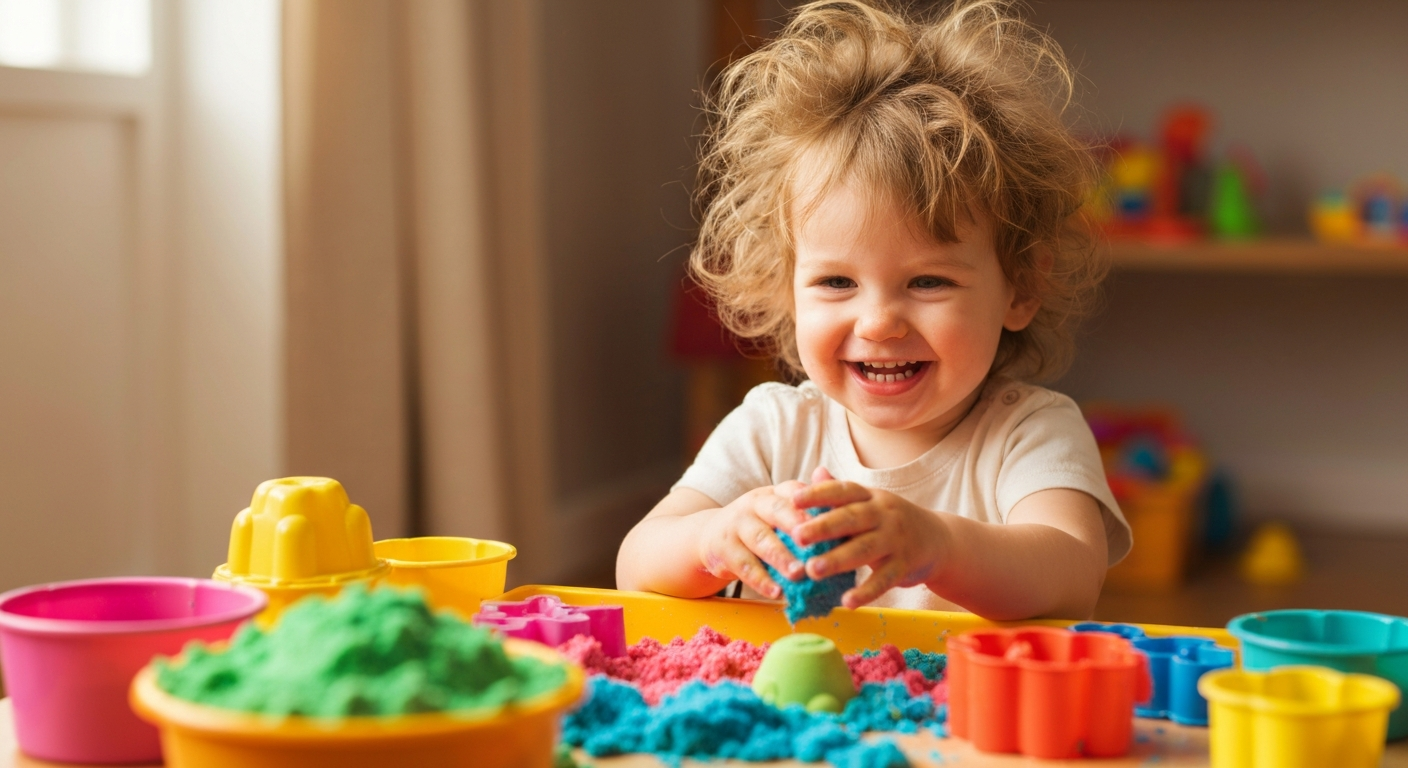
Kinetic sand is one of the most universally satisfying sensory materials for this age. Pack it into cookie cutters, cups, and molds for cutting and building. The texture satisfies tactile needs in a deeply regulating way.
6. Digging for Treasure
Bury small “treasures” (coins, gems, toy figures) in a sandbox or a bin of kinetic sand. Give your 3-year-old tools to excavate — a small brush, a spoon, a strainer. The hunt and discovery is endlessly compelling.
7. Mud Kitchen
If you have outdoor space, a mud kitchen is an investment that pays for years. Even without a fancy setup, a bin of dirt, some old bowls, spoons, and water creates a full imaginative sensory kitchen. Messy? Yes. Worth it? Absolutely.
Dough and Clay Play
8. Homemade Playdough
The best playdough for 3-year-olds is often the kind you make together. Combine 1 cup flour, 1/4 cup salt, 1/2 cup warm water, 1 tbsp oil, 1 tsp cream of tartar, and food coloring. Knead together. The making is half the sensory experience. Keep some playdough tools and molds handy for extending the play.
9. Scented Playdough
Add a few drops of essential oil or a packet of unsweetened drink mix to playdough for a scented version. Lavender is calming, citrus is energizing. The olfactory element adds another dimension to the sensory experience.
10. Cloud Dough Sculpting
Mix 8 cups flour with 1 cup baby oil. It crumbles like sand but holds shape when pressed. The unique texture fascinates most 3-year-olds who’ve seen regular playdough many times. Great for building mountains, nests, or abstract sculptures.
11. Salt Dough Creations (to Keep)
Mix 2 cups flour, 1 cup salt, 1 cup water. Create shapes or impress objects (leaves, hands, stamps) into it. Bake at 250°F for 2 hours. These can be painted and kept — a lovely keepsake and a multi-session sensory activity.
Art and Painting
12. Finger Painting
Classic for a reason. Use washable finger paints on large paper taped to the floor. The directness of hands on color is deeply satisfying for this age — and liberating for kids who are just learning fine motor tool use. Let them do the whole hand and arms if they want. It washes off.
13. Bubble Wrap Painting
Tape a sheet of bubble wrap to the table, apply paint with a sponge or brush, then press paper on top for a dotted print. Or stomp on the bubble wrap with painted bare feet (outside). Texture + art + a bit of chaos.
14. Ice Cube Painting
Freeze paint in an ice cube tray (add popsicle sticks for handles as it freezes). Paint with the ice cubes — the colors mix and shift as the ice melts and the paint runs. Fascinating and multi-sensory.
15. Shaving Cream Art
Spray shaving cream on a tray and add drops of food coloring. Swirl with a popsicle stick, then press cardstock on top and lift for a marbled print. The texture of shaving cream is irresistible to small hands — many 3-year-olds will play in it for 30 minutes straight.
Textural Exploration
16. Texture Walk
Set up a series of sensory “stations” to walk through in bare feet: bubble wrap, a tray of sand, a wet sponge mat, a pile of dried beans, a soft rug. Ask your child to describe how each one feels. Big vocabulary builder, great body awareness builder.
17. Feely Box
Cut a hand-sized hole in a shoebox lid. Put an object inside and ask your child to reach in, feel around, and guess what’s there. Start with obvious things (a rubber duck, a spoon, a ball) and work toward more challenging ones (a pinecone, a key, a sock).
18. Sensory Collage
Glue a variety of textured materials to a piece of cardboard: fabric scraps, cotton balls, sandpaper squares, smooth foil, rough burlap, soft fur trim. Trace fingers over each section. Talk about the differences. Keeps the tactile and the artistic beautifully connected.
Messy Kitchen Sensory
19. Dried Bean and Pasta Bin
A large container of mixed dried beans and pasta shapes with scoops, funnels, and cups provides hours of pouring, scooping, and sorting. One of the lowest-cost, highest-engagement setups you can do.
20. Oobleck (Cornstarch + Water)
Mix 2 cups cornstarch with 1 cup water. Oobleck behaves like a solid when pressure is applied and a liquid when relaxed. It is one of the most mind-bending sensory experiences for young children. Expect mess. Expect wonder.
21. Cooked Spaghetti Bin
Cook spaghetti until soft, let it cool, and toss with food coloring. This one is outlandishly fun. The slippery, squishy texture is unlike anything else and often produces the most joyful reactions.
22. Gelatin Dig
Make Jell-O according to directions and add small toys inside before it sets. Let your child dig toys out of the wobbly gelatin. Cold, jiggly, and delightfully weird.
Outdoor Sensory
23. Leaf Rubbings
Place leaves under paper and rub the side of a crayon over the paper to reveal the leaf pattern. Simple, beautiful, and introduces texture through art.
24. Rain Play
When it’s warm enough, let your child play outside in a light warm rain. The sensation of rain on skin, puddle jumping, watching puddles form — all deeply sensory and uniquely magical.
25. Barefoot Nature Walk
Take shoes and socks off for a backyard exploration. Feel grass, dirt, pavement, wood chips, rocks. Talk about each texture. Simple grounding activity that also builds sensory tolerance.
Calming Sensory
26. Lavender Rice Bin
Color rice with food coloring and add a few drops of lavender essential oil. This bin is specifically designed for calming — the sensory input plus the soothing scent is deeply regulating for overtired or overwhelmed 3-year-olds.
27. Water Bead Bin
Expand water beads overnight in water and set up in a shallow tray. The smooth, cool, squishy feeling is incredibly soothing. Supervision required for this age — beads can be a choking hazard if any are still small.
28. Bubble Bath Sensory Time
A bathtub full of bubbles and a few simple toys is legitimate sensory play. Add a few drops of lavender and it doubles as a wind-down before nap or bedtime.
Building and Constructing
29. Cardboard Box City
Collect boxes of different sizes and let your child create a city, tower, or robot. Paint them, tape them, arrange them. The construction is sensory (carrying, stacking, feeling the resistance of cardboard) and the imaginative play extends for days.
30. Natural Materials Building
Gather sticks, pine cones, large smooth stones, and leaves. Use them to build fairy houses, tiny villages, or just see how high you can stack. Connection to natural materials is calming, grounding, and developmentally rich.
Tips for Sensory Play at This Age
- Prepare for mess. A smock, a splat mat, or doing activities outside dramatically reduces the cleanup anxiety that can make sensory play feel not worth it.
- Some kids need time to warm up. Sensory-sensitive 3-year-olds might approach a new texture with a single finger first. That’s completely fine and normal. Let them lead.
- Follow their lead. If they want to pour everything into one pile and call it soup instead of doing the intended activity, great. The play is the point.
- Talk during play. Sensory play is one of the richest language-building opportunities of childhood. Name textures, colors, actions, and feelings constantly.
The Best Investment Is Your Presence
You don’t need to run a curriculum of sensory activities. You need to occasionally slow down, get your hands in the beans or the playdough or the shaving cream alongside your kid, and let yourself be present. Those are the moments that build brains, bonds, and the kind of childhood memories that last.
Related Reading
- 50 Sensory Bin Ideas for Toddlers
- 20 Mindfulness Activities for Kids
- What to Put in a Calm Down Kit for Kids
