
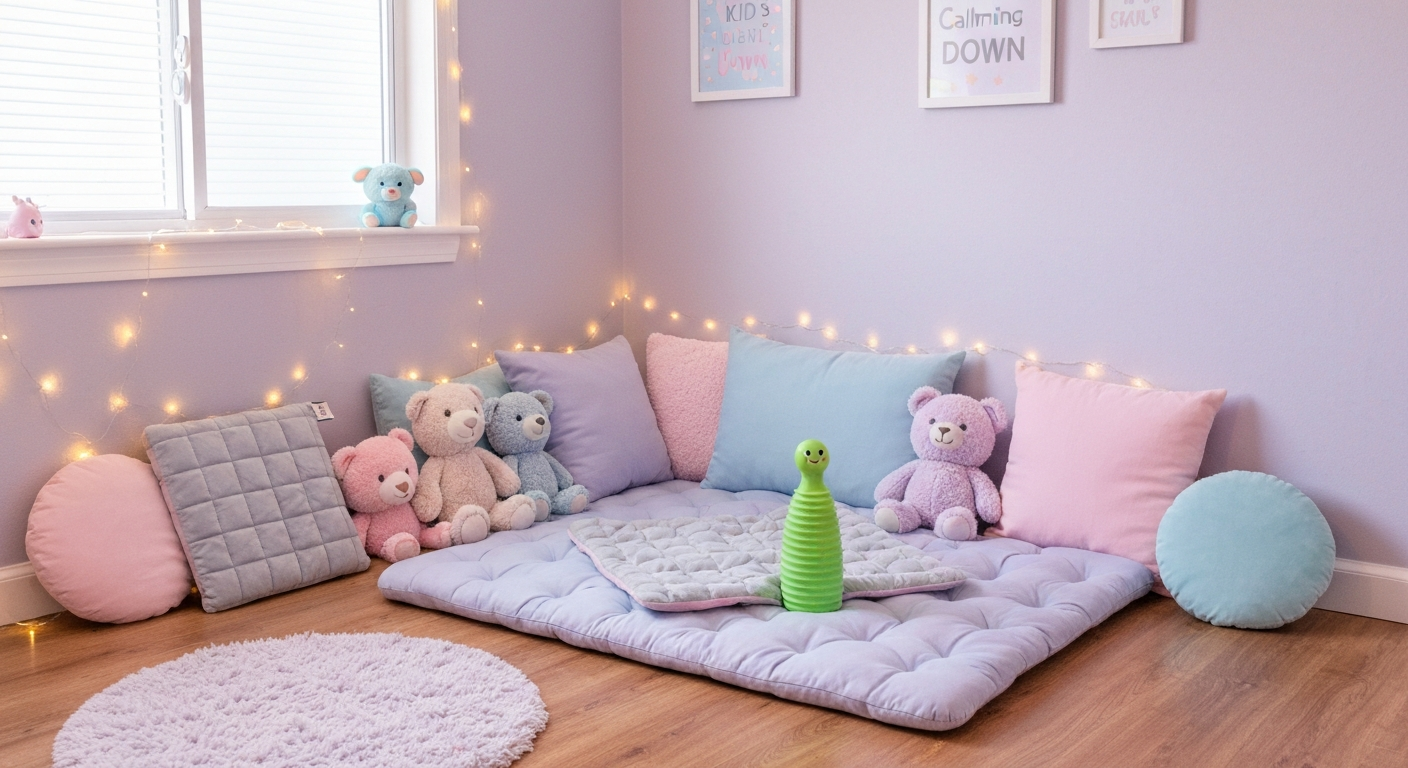
What Is a Calm Down Corner (And Why Does It Work)?
If you’ve ever watched your child spiral into a full meltdown and thought, “There has to be a better way” — you’re not alone. That’s exactly why calm down corners have become one of the most beloved tools in the gentle parenting toolkit. A calm down corner is a dedicated, cozy space in your home where kids can go to regulate their emotions, decompress, and feel safe when big feelings hit.
Unlike a “time-out” (which can feel punitive and isolating), a calm down corner is an empowering, child-led space. It says: Your feelings are valid. Here’s a safe place to feel them. And the best part? They actually work — backed by child development research showing that kids need help co-regulating before they can self-regulate.
Ready to create one? Here are 15 calm down corner ideas that real moms swear by.
15 Calm Down Corner Ideas for Kids
1. The Classic Cozy Tent
A small pop-up tent or teepee instantly creates a sense of enclosure and safety. Something about having four walls (even soft, fabric ones) helps kids feel contained and secure. Toss in a few soft pillows, a blanket, and a stuffed animal, and you’ve got an instant retreat. Look for a kids’ play tent or teepee that fits snugly in a corner of their room or playroom.
2. The Sensory Bottle Station
Glitter jars — also called calm-down bottles or mindfulness jars — are mesmerizing for kids. When they shake the bottle and watch the glitter slowly settle, it naturally slows their breathing and helps them return to calm. You can make DIY versions with glitter glue and water, or buy ready-made sets. Keep a few in different colors for variety.
3. The Feelings Chart Wall
Sometimes kids can’t tell you what’s wrong because they genuinely don’t know how to name it. A colorful feelings chart hung at their eye level gives them vocabulary. Point to the face that matches how you feel. This simple act of identification is often the first step toward regulation. Pair it with a “what helps me feel better” chart for even more impact.
4. A Weighted Stuffed Animal
The gentle pressure of a weighted stuffed animal mimics deep pressure therapy — the same reason a tight hug feels so soothing. Kids can hold it, squeeze it, or lay it across their lap while they calm down. These are especially helpful for kids with sensory sensitivities or anxiety.
5. The Book Nook
Stocking your calm down corner with a few favorite picture books — especially ones about emotions — gives kids something to do with their hands and mind while they decompress. Books like The Invisible String, Breathe Like a Bear, or When Sophie Gets Angry are perfect choices.
6. A Breathing Exercise Visual
Laminate a simple breathing exercise poster and hang it in the corner. Star breathing, box breathing, or belly breathing visuals give kids a concrete tool to use in the moment. Even toddlers can learn to “smell the flowers, blow out the candles” with a little practice.
7. Kinetic Sand or Play Dough
There is something deeply calming about the sensory experience of squishing, rolling, or pressing soft material. Keep a small container of kinetic sand or play dough in the corner (sealed between uses, of course). The repetitive, tactile motion helps discharge big emotions through the hands and body.
8. Noise-Canceling Headphones
For kids who get overwhelmed by sensory input — especially sound — having a pair of kids’ noise-canceling headphones in the corner can be life-changing. They can listen to calming music, nature sounds, or simply have quiet. Many kids with sensory sensitivities find this profoundly soothing.
9. A Mini Zen Garden
Yes, even for kids! A small sandbox-style zen garden with a tiny rake gives little hands something to do while their nervous system settles. Dragging the rake through the sand in slow, deliberate patterns is almost meditative. You’d be surprised how even a 4-year-old can get absorbed in this.
10. Emotion Dice or Feelings Cards
Roll the dice, land on an emotion, and talk about what that feels like. Or pull a card and act it out. These playful tools help kids build emotional literacy in a low-pressure way — especially useful during calm times so the skills are ready when big feelings hit.
11. A “Tools That Help Me” Box
Let your child help fill a small decorated box with items that personally help them calm down. Maybe it’s a fidget spinner, a small photo of your family, a smooth worry stone, or a scent strip with lavender. When kids have ownership over the tools, they’re far more likely to actually use them.
12. Soft Lighting
Harsh overhead lighting can actually heighten stress. Add a small lamp with warm-toned bulbs, a string of fairy lights, or even a color-changing night light to your calm corner. Softer, dimmer light signals “rest and relax” to the nervous system.
13. A Squeeze Ball Collection
Fidget tools serve a real neurological purpose — they give the body a safe outlet for agitation energy. A small basket with a variety of squeeze balls, fidget rings, or sensory cubes lets kids pick what feels best in the moment. Different textures and resistance levels appeal to different kids.
14. A Calm-Down Timer
Visual timers help kids understand “you don’t have to stay here forever, just for a little while.” A sand timer or visual timer with a color bar gives them a concrete endpoint, which can reduce resistance to using the space. Start with 3–5 minutes for younger kids.
15. A Gratitude or Happy Memories Journal
For older kids (ages 6+), a simple journal where they can draw or write about things that make them happy can shift their focus after strong emotions. Keep some crayons or colored pencils nearby. This isn’t about bypassing feelings — it’s about having a pathway back to baseline once the feelings have been felt.
Tips for Setting Up Your Calm Down Corner
A few things that make the difference between a corner that gets used and one that collects dust:
- Involve your child in creating it. Let them pick the colors, choose what goes inside, and name the space. (“The Cozy Cave” or “My Feelings Spot” feels very different from “the corner mom made me go to.”)
- Introduce it during a calm moment, not a crisis. Practice going there together when no one is upset so it feels familiar and safe.
- Never use it as a punishment. If kids associate it with being sent away, they’ll resist it. Frame it as a tool: “This is your special place to feel better.”
- Keep it accessible. The corner only works if kids can actually get to it. Put it somewhere obvious, not locked behind a door or buried in clutter.
- Refresh it occasionally. Swap out a few items seasonally to keep it interesting and relevant to your child’s current needs.
You’ve Got This, Mama
Creating a calm down corner is one of the most loving things you can do for your child’s emotional development. It says: I see you. Your feelings matter. And I’m going to help you learn to handle them. That message alone is worth more than any specific tool in the corner.
Start simple — even a blanket in the corner with two items — and build from there. The perfect calm down corner is the one your child actually uses. And remember: it’s okay if it takes a few tries to find what works for your specific kid. You’re figuring it out together, and that’s exactly what gentle parenting looks like.
Related Reading
- What to Put in a Calm Down Kit for Kids
- Breathing Exercises for Kids: 8 Easy Techniques
- Calming Techniques for Kids with Anxiety
